🌻 From the book
40 Facts about BPD
Living alongside Borderline Personality Disorder — use arrows, dots, or swipe to browse. Slides advance automatically.
Order the Book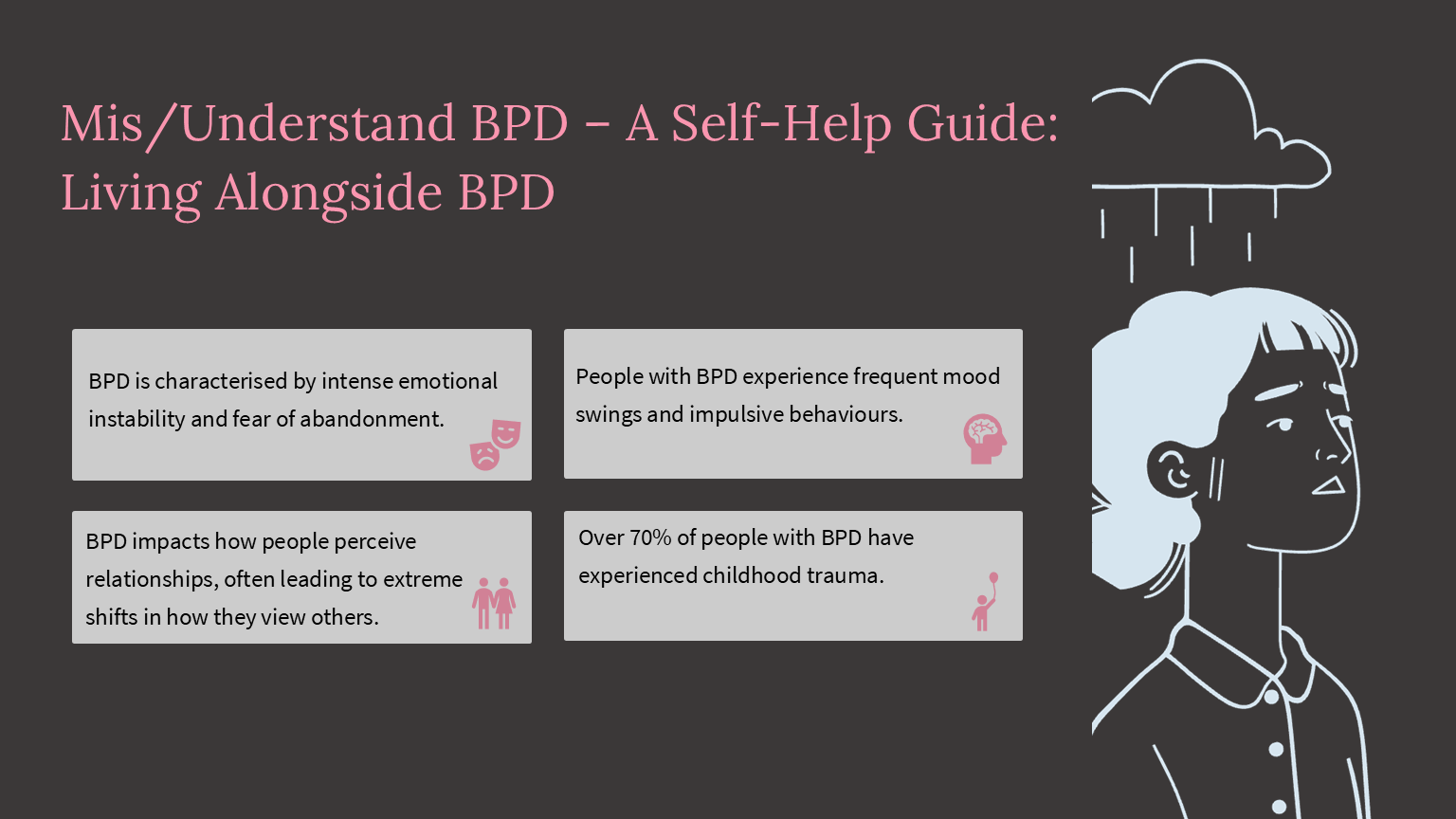

Living alongside Borderline Personality Disorder — use arrows, dots, or swipe to browse. Slides advance automatically.
Order the BookBPD is characterised by intense emotional instability and fear of abandonment.
People with BPD experience frequent mood swings and impulsive behaviours.
BPD impacts how people perceive relationships, often leading to extreme shifts in how they view others.
Over 70% of people with BPD have experienced childhood trauma.
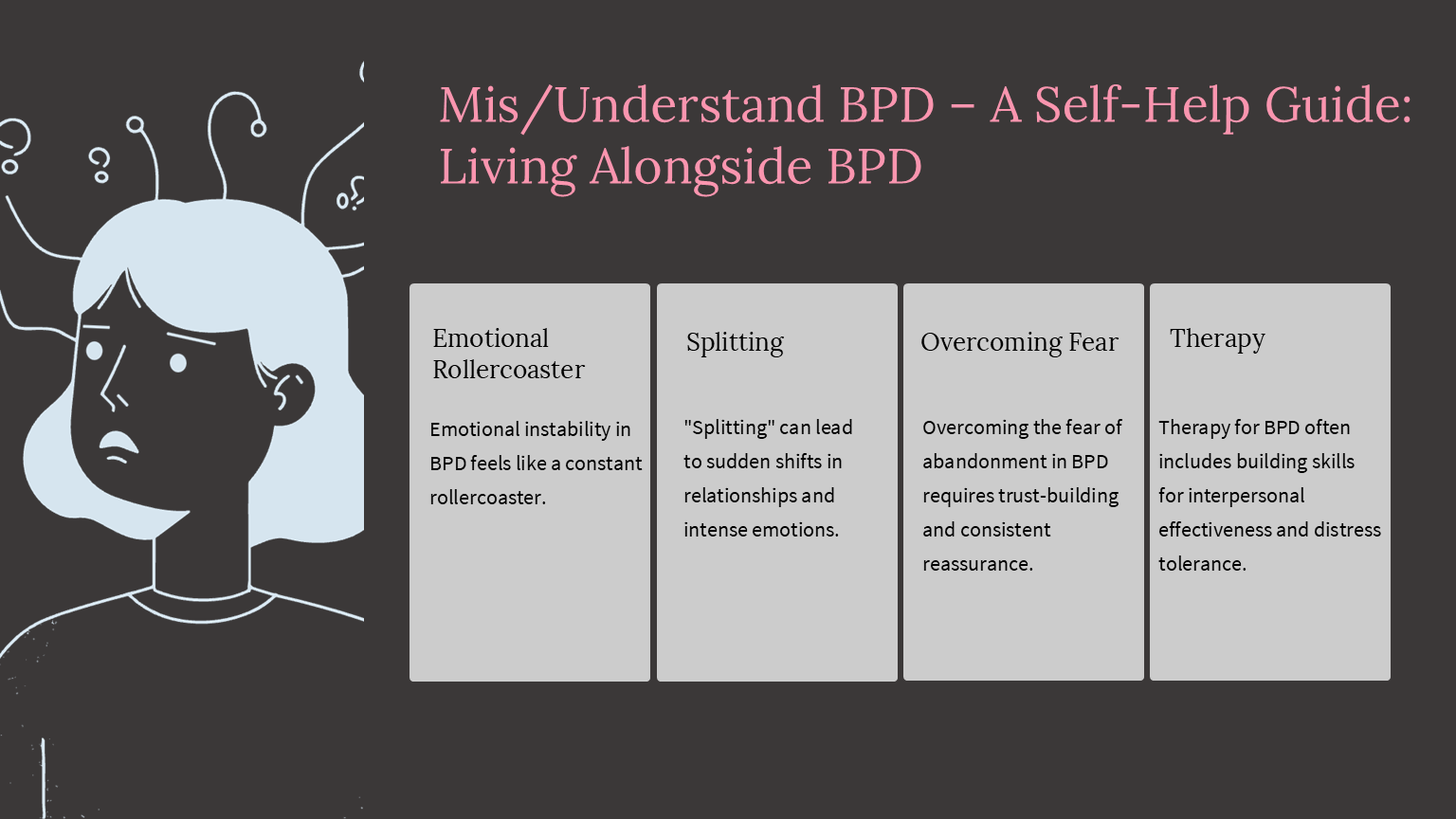
Emotional instability in BPD feels like a constant rollercoaster.
"Splitting" can lead to sudden shifts in relationships and intense emotions.
Overcoming the fear of abandonment in BPD requires trust-building and consistent reassurance.
Therapy for BPD often includes building skills for interpersonal effectiveness and distress tolerance.
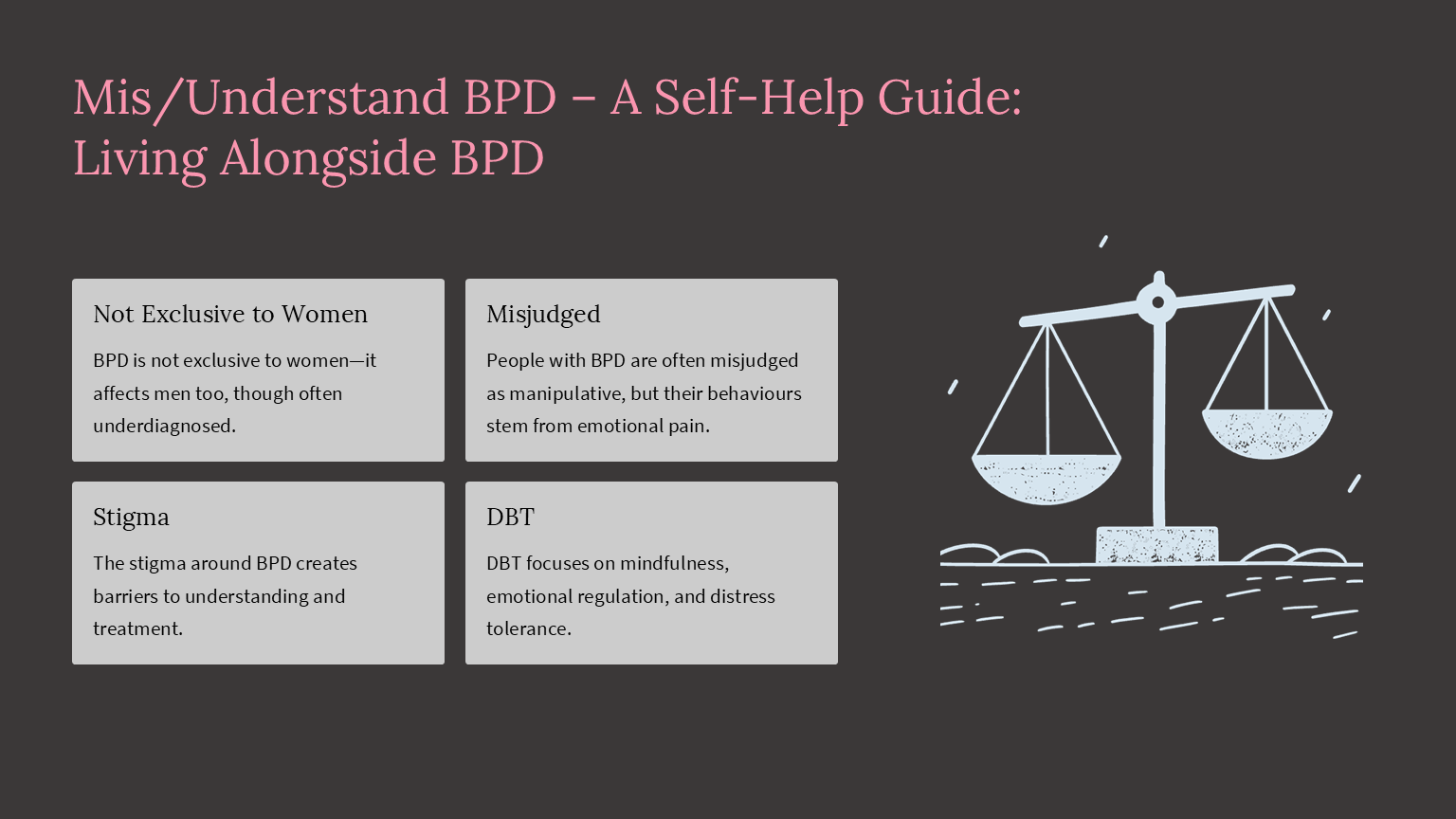
BPD is not exclusive to women — it affects men too, though often underdiagnosed.
People with BPD are often misjudged as manipulative, but their behaviours stem from emotional pain.
The stigma around BPD creates barriers to understanding and treatment.
DBT focuses on mindfulness, emotional regulation, and distress tolerance.
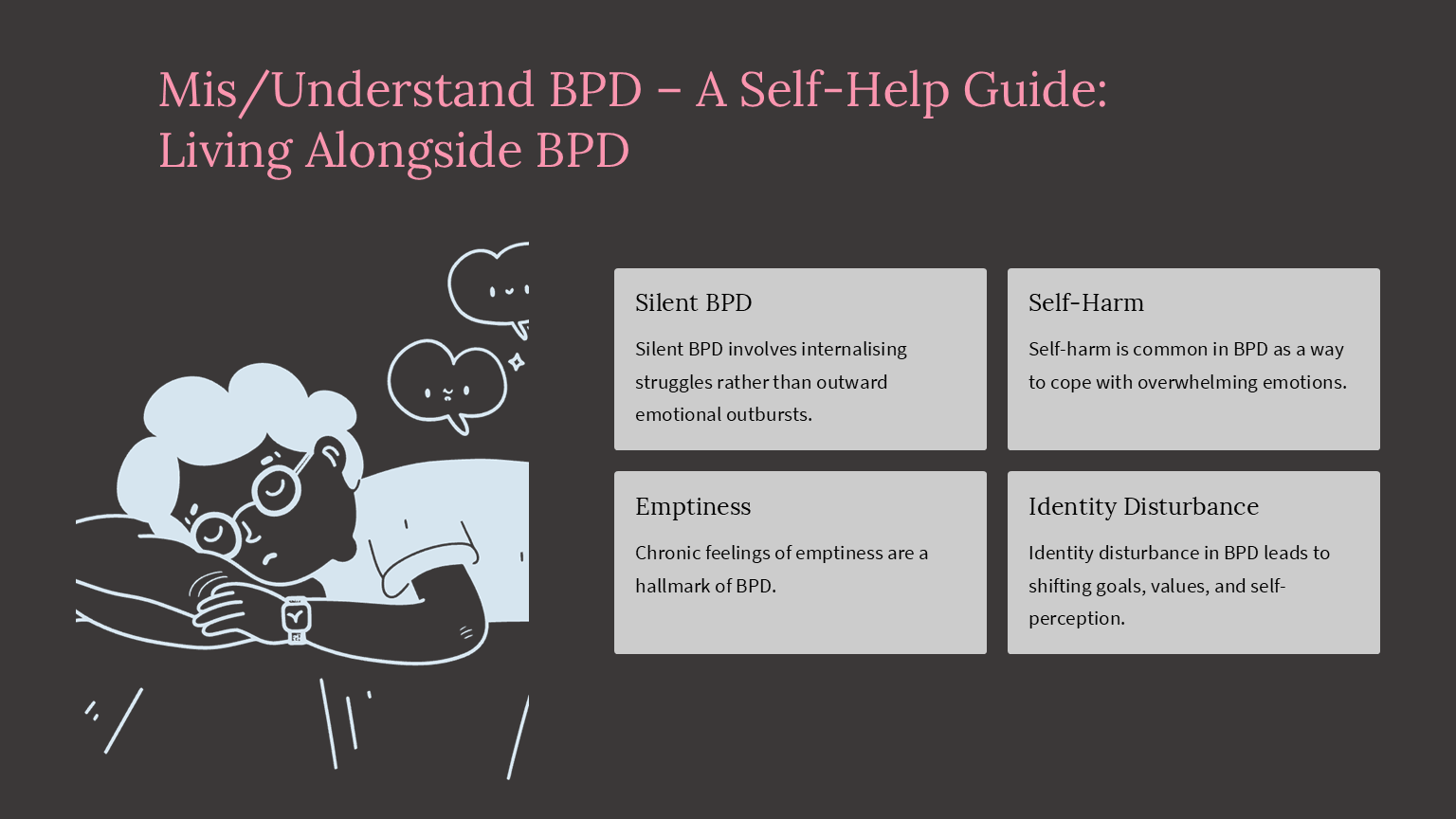
Silent BPD involves internalising struggles rather than outward emotional outbursts.
Self-harm is common in BPD as a way to cope with overwhelming emotions.
Chronic feelings of emptiness are a hallmark of BPD.
Identity disturbance in BPD leads to shifting goals, values, and self-perception.
Impulsive behaviours, like reckless spending or substance use, are common in BPD.
People with BPD may experience episodes of paranoia or dissociation under stress.
Clear and consistent communication can help reduce misunderstandings with those who have BPD.
Grounding techniques can help someone with BPD regain control during emotional distress.
Individuals with BPD may struggle to process nuanced emotions, leading to heightened emotional responses.
Misconceptions about BPD hinder support and treatment.
Validation of emotions is crucial for supporting someone with BPD.
Professional therapy, such as DBT, builds coping skills and emotional resilience.
Fear of abandonment can lead to push-pull behaviours in relationships.
BPD is often confused with bipolar disorder, but they are distinct conditions.
People with BPD can experience extreme empathy and sensitivity to others' emotions.
Predictable routines can help reduce the anxiety and emotional dysregulation common in BPD.
Mindfulness practices can help people with BPD stay present and manage triggers.
BPD is treatable, and many individuals lead fulfilling lives with the right support.
Emotional regulation skills can dramatically reduce the intensity of emotional outbursts.
Stigma can lead to isolation and worsen symptoms for people with BPD.
A safe environment helps reduce stress and emotional overwhelm for those with BPD.
People with BPD may misinterpret neutral actions as rejection or criticism.
Effective boundaries provide clarity and safety for both individuals and loved ones.
Emotional whiplash in BPD is a symptom, not a choice.
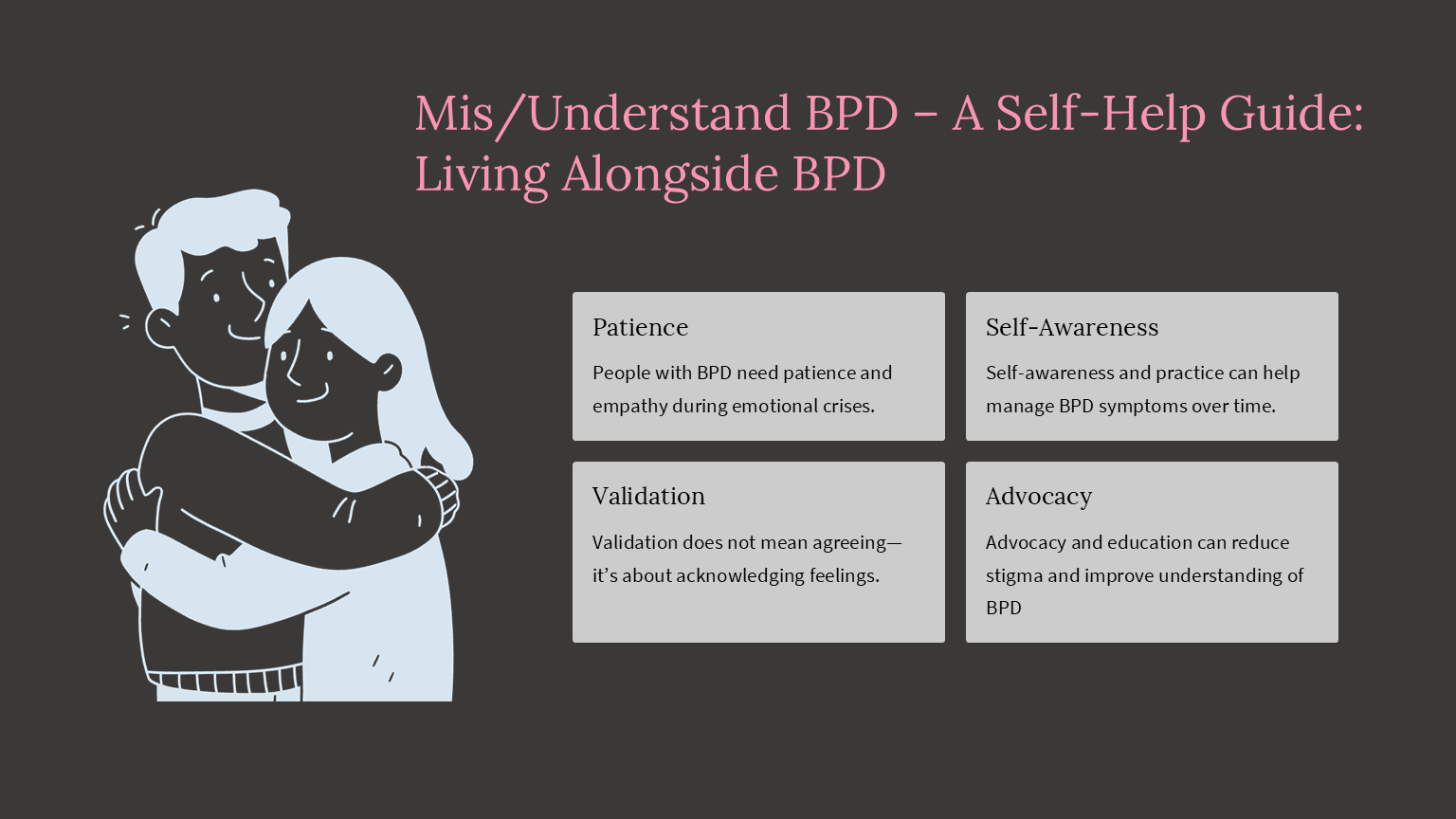
People with BPD need patience and empathy during emotional crises.
Self-awareness and practice can help manage BPD symptoms over time.
Validation does not mean agreeing — it's about acknowledging feelings.
Advocacy and education can reduce stigma and improve understanding of BPD.
Mis/Understand Borderline Personality Disorder by Arthur J. Foggin — available now on Amazon.